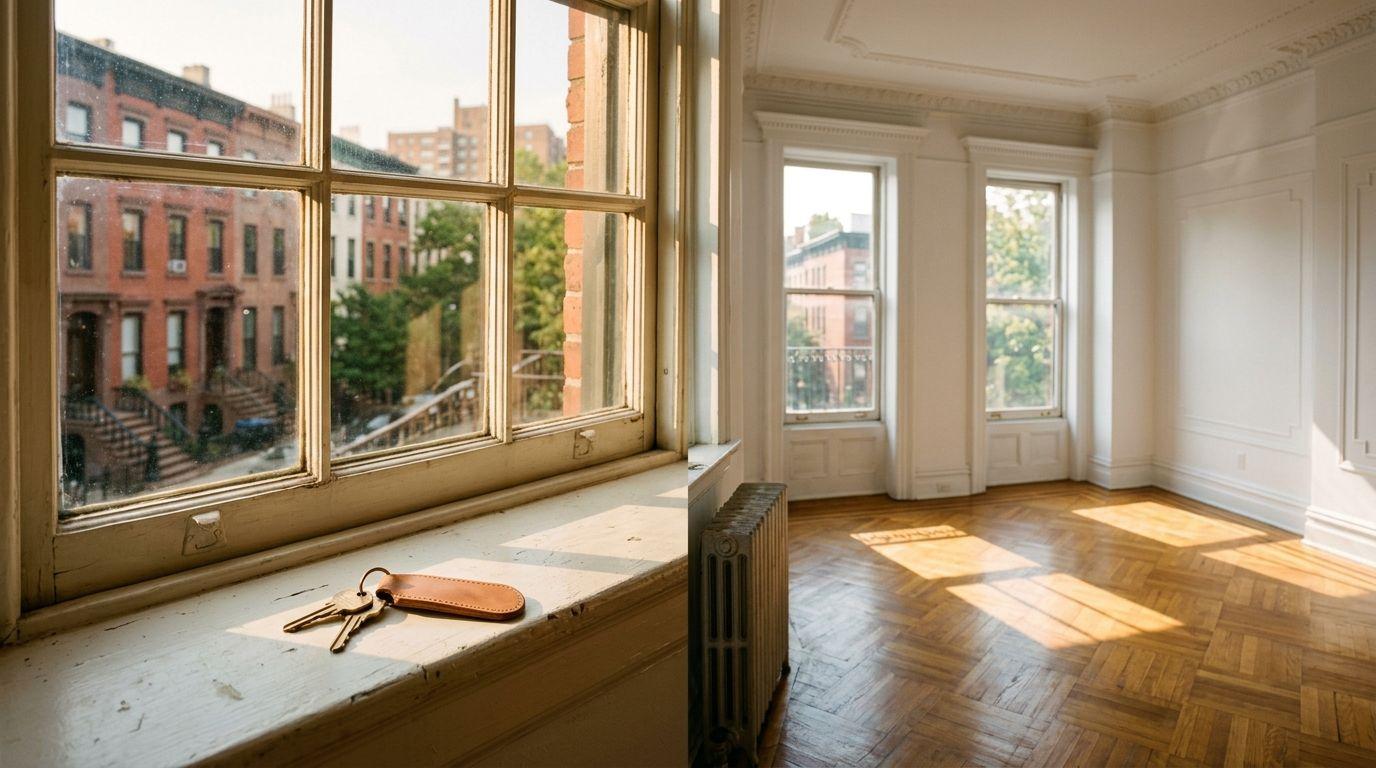
The velocity of the New York City rental market shocks even well-prepared newcomers: a sunlit, reasonably priced one-bedroom in Brooklyn or Lower Manhattan posted on StreetEasy at 9:00 AM on a Tuesday will routinely draw twenty inquiries by noon, host a crowded open house at 5:30 PM, and have a lease signed by Wednesday morning.
Winning that race has nothing to do with luck and everything to do with preparation. Before you set foot in a single apartment, build a single, bookmarked PDF on your phone titled "LastName_Apartment_Application.pdf" containing: a photo ID, your last two tax returns and W-2s, your three most recent pay stubs, an employment verification letter on company letterhead, and the summary pages of your last two bank statements (with account numbers blacked out).
Understand the ironclad math of New York landlords: the 40x Rule. Most management companies require your gross annual income (or the combined income of roommates) to equal at least 40 times the monthly rent—meaning a $3,000/month apartment requires $120,000 in annual income. If using a personal parental or tri-state guarantor, landlords typically require the guarantor to earn 80 times the monthly rent.
Never sign a lease without running a free two-minute background check on the building itself. Open the NYC Department of Housing Preservation & Development portal (HPD Online at hpdonline.nyc.gov) and the non-profit tool WhoOwnsWhat (whoownswhat.justfix.org). Type in the street address to inspect every logged heat/hot-water complaint, bedbug report, and open Class C building violation from the past three years.
Know your statutory rights as a New York tenant: under the Housing Stability and Tenant Protection Act of 2019, landlords cannot charge more than $20 for an application/credit check fee, and security deposits are strictly capped at one single month’s rent (no "first, last, and two months security"). Furthermore, under NYC’s FARE Act, landlords who hire a listing broker cannot force tenants to pay the landlord’s broker commission.
Finally, hunt for the holy grail of New York living: a rent-stabilized apartment (most commonly found in pre-1974 buildings with six or more units). Once you move into a rent-stabilized unit, you have the legal right to request your apartment’s official Certified Rent History from New York State HCR (hcr.ny.gov)—confirming the legal regulated rent and guaranteeing your right to renew your lease every year at modest rates set by the Rent Guidelines Board.