Every Block Tells a Story
SuperNYC Neighborhoods takes you inside the unique character of every borough—from the brownstones of Brooklyn to the hidden courtyards of the West Village. Explore local culture, history, food, and must-see spots in each neighborhood that makes New York one of a kind.
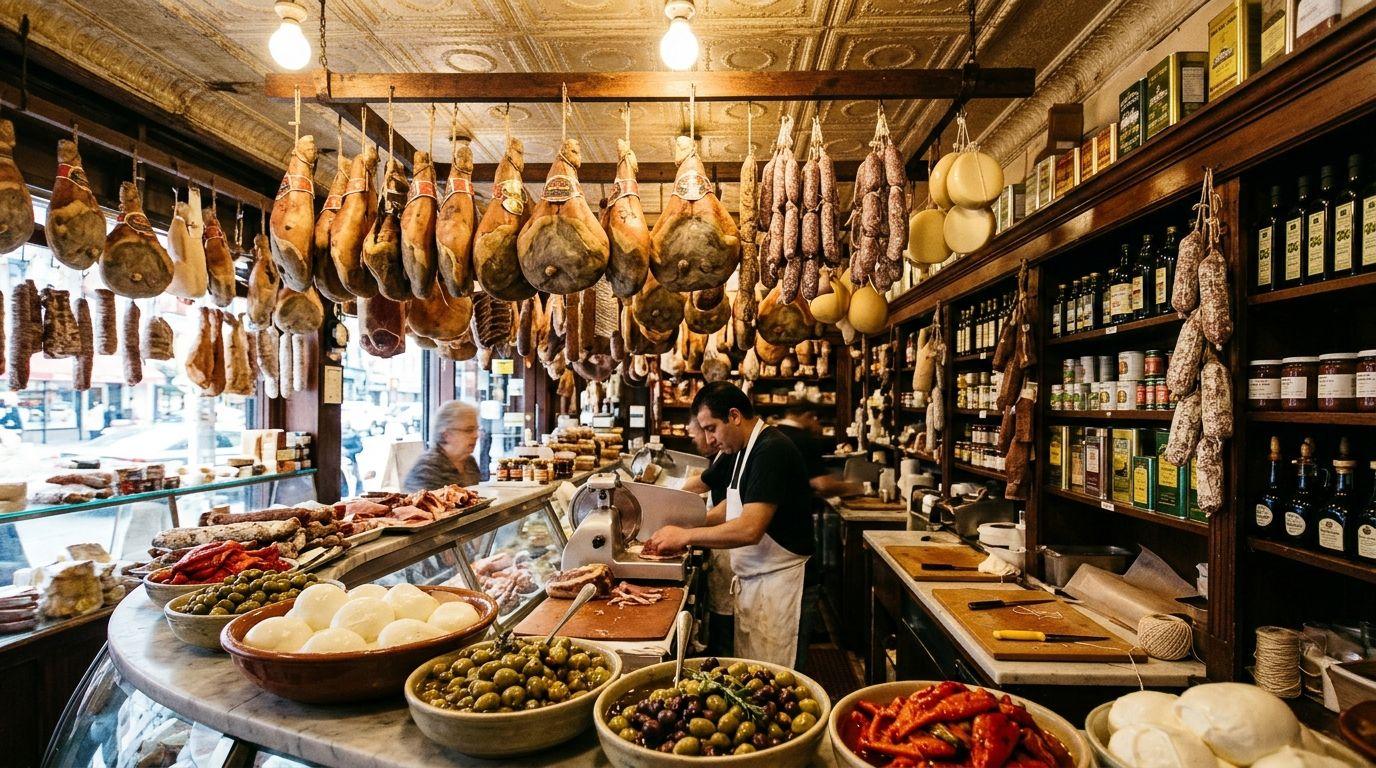
Arthur Avenue (Belmont)
The Bronx’s authentic, working Little Italy where fourth-generation artisans rule the counter.
Arthur Avenue (Belmont)
The Bronx’s authentic, working Little Italy where fourth-generation artisans rule the counter.
Settled in the late nineteenth century by Italian stonecutters and craftsmen who built the neighboring Bronx Zoo and New York Botanical Garden, the Belmont neighborhood centered on Arthur Avenue and East 187th Street is where New York chefs actually shop for Italian ingredients. Instead of one-stop supermarkets, Belmont preserves the traditional European guild model: you buy your warm fior di latte from the cheesemaker, your fresh egg fettuccine from the pasta cutter, your dry-cured sausage from the pork store, and your sesame loaf from the brick-oven baker.
Must-Visit Enclaves & Spots
+3 more in full guide →Casa Della Mozzarella
Watch Orazio and Carlo Carciotto pull glossy, warm fior di latte curds by hand behind the counter; order a custom bocconcini hero on crusty bread.
Calabria Pork Store
Look up at a ceiling-wide "chandelier" of hundreds of dry-cured sweet and hot soppressata sausages ageing overhead.
Madonia Brothers Bakery
Over a century of crusty pane di casa, olive and prosciutto loaves, and Sicilian cannoli piped fresh to order with sheep’s-milk ricotta.
Local Pro Tip: Take the Metro-North Harlem Line from Grand Central Terminal using a $5 CityTicket—it drops you at Fordham Station in just 18 minutes, a pleasant 10-minute walk down Fordham Road to Arthur Avenue.
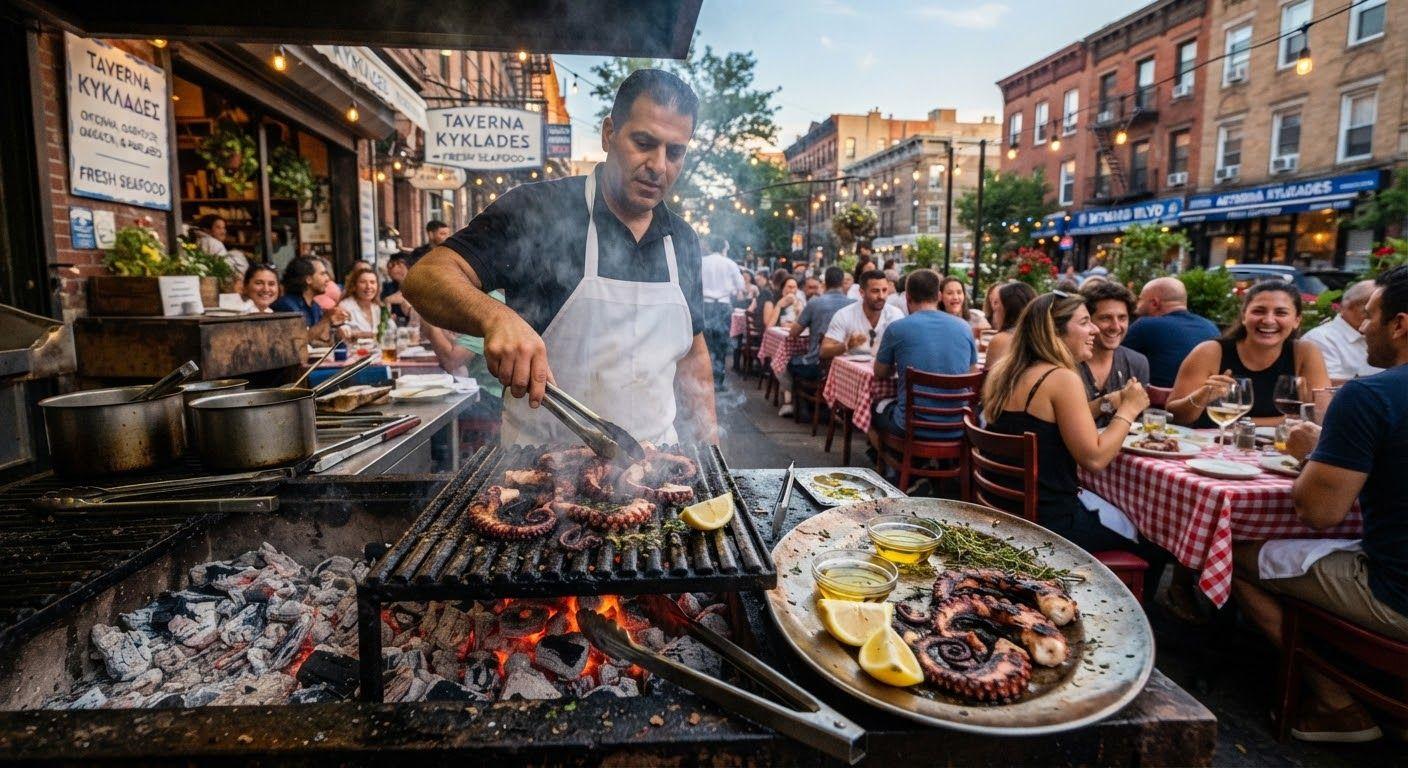
Astoria
Queens’ warm, hyper-diverse capital of Mediterranean dining and silver-screen history.
Astoria
Queens’ warm, hyper-diverse capital of Mediterranean dining and silver-screen history.
Just fifteen minutes across the East River from Midtown Manhattan on the N and W trains, Astoria manages to feel like a welcoming urban village while offering one of the deepest culinary benches in New York. Long anchored by its Greek-American community along Ditmars Boulevard and Broadway, the neighborhood seamlessly blends seaside fish tavernas, Little Egypt’s fragrant bakeries and hookah cafés on Steinway Street, a 1910 Czech beer garden, and the historic 1920 studio lot of the Museum of the Moving Image.
Must-Visit Enclaves & Spots
+3 more in full guide →Taverna Kyclades
Astoria’s flagship Greek taverna, famous for tender charcoal-grilled octopus, whole Mediterranean sea bass, and complimentary halva.
Museum of the Moving Image
Fourteen hundred historic cameras, interactive sound-design booths, a 70mm theater, and the permanent Jim Henson Muppets Exhibition.
Bohemian Hall & Beer Garden
Founded by Czech and Slovak immigrants in 1910, NYC’s oldest walled beer garden seats hundreds beneath towering linden trees.
Local Pro Tip: Museum of the Moving Image is 100% free every Thursday afternoon from 2:00 PM to 6:00 PM—pair it with a late afternoon walk down to the grassy hill under the Hell Gate Bridge in Astoria Park for sunset.
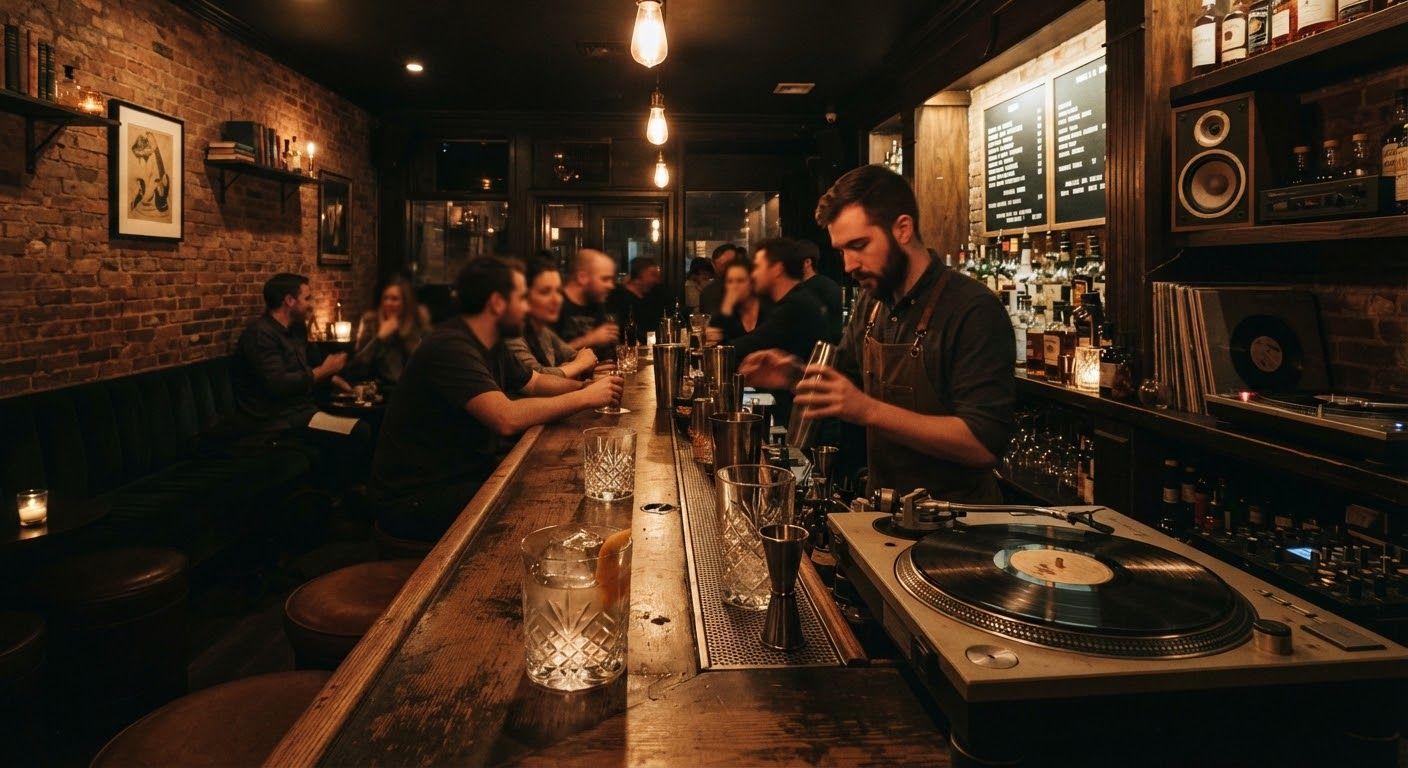
Chinatown / Lower East Side
Two centuries of immigrant resilience, iconic street eats, and downtown nightlife side by side.
Chinatown / Lower East Side
Two centuries of immigrant resilience, iconic street eats, and downtown nightlife side by side.
Where Canal Street, the Bowery, and Orchard Street converge, Chinatown and the Lower East Side form the historic gateway of immigrant New York. Walk three blocks in any direction and the layers of history are palpable: century-old Cantonese dim sum parlors and hidden cocktail apothecaries on Doyers Street give way to historic synagogues, fourth-generation smoked-fish counters on East Houston, the preserved apartments of the Tenement Museum, and contemporary art galleries lining Chrystie and Freeman Alley.
Must-Visit Enclaves & Spots
+3 more in full guide →Nom Wah Tea Parlor & Doyers Street
New York’s oldest dim sum parlor sits right on the curved "Bloody Angle" of Doyers Street, steps from hidden cocktail rooms Apothéke and Peachy’s.
The Tenement Museum
Step inside the restored 19th- and 20th-century apartments of real immigrant and migrant families at 97 and 103 Orchard Street.
Russ & Daughters & Katz’s Delicatessen
Hand-sliced Gaspe Nova smoked salmon and caviar on bagels at 179 E Houston St, two blocks from Katz’s legendary hand-carved pastrami on rye.
Local Pro Tip: Start on Orchard and East Houston before 10:30 AM to beat the weekend lines at Russ & Daughters and Katz’s, then walk south through Eldridge and Doyers Streets as Chinatown’s roast-meat and dim sum shops hit full stride.
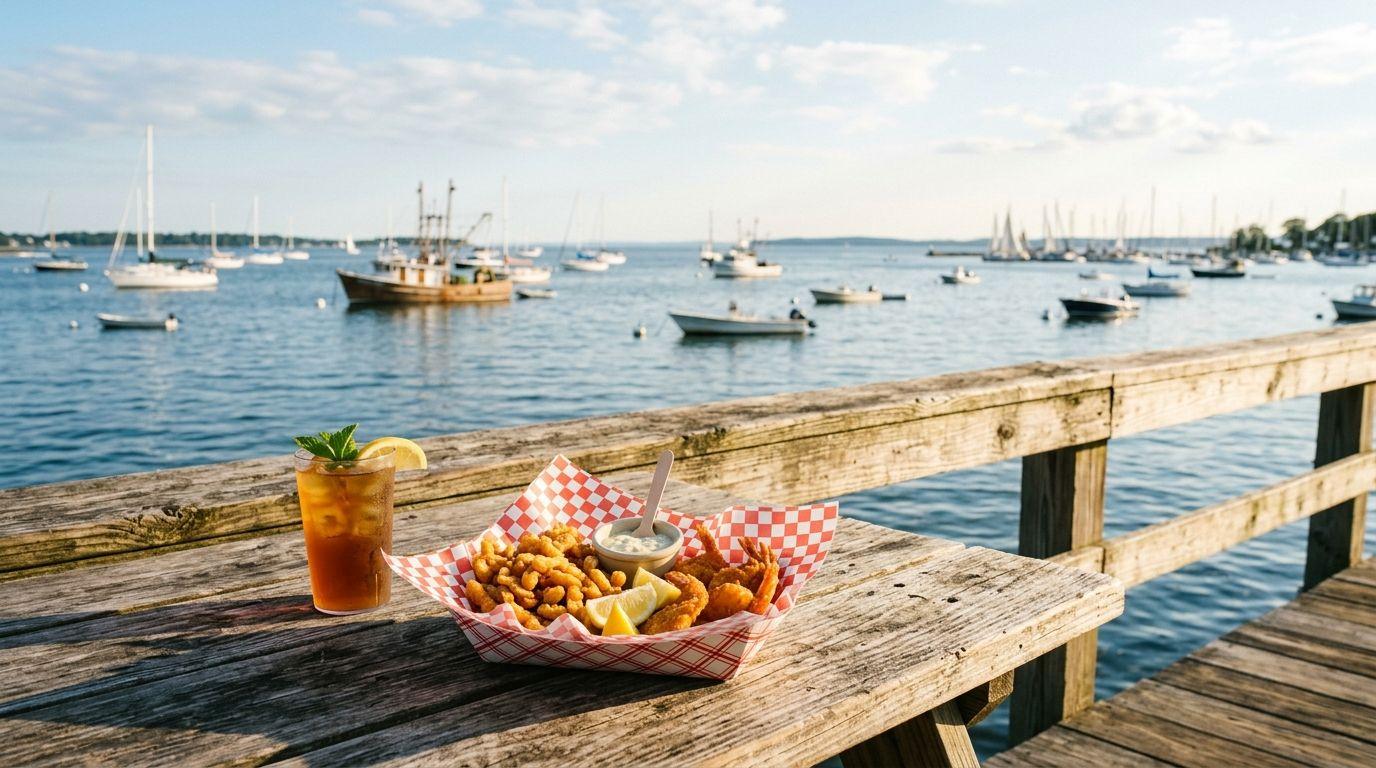
City Island
A 1.5-mile New England-style fishing and yachting village tucked inside the eastern Bronx.
City Island
A 1.5-mile New England-style fishing and yachting village tucked inside the eastern Bronx.
Connected to Pelham Bay Park by a single bridge across Eastchester Bay, City Island feels like you’ve teleported to coastal Maine or Cape Cod without ever leaving the 718 area code. Once a world-famous shipbuilding hub where winning America’s Cup yachts were framed and launched, this 1.5-mile island swaps subway grates and skyscrapers for active boatyards, nineteenth-century Victorian cottages on dead-end side streets, and waterfront picnic tables piled high with steamed lobster and fried whole-belly clams.
Must-Visit Enclaves & Spots
+3 more in full guide →Johnny’s Reef Restaurant
At the very southern tip of the island since the 1950s: carry a cash-only tray of fried clams, shrimp, and steamed little-necks out to the seawall picnic tables.
City Island Nautical Museum
Housed inside an 1897 red-brick public schoolhouse, showcasing vintage America’s Cup yacht models, sailmaking lofts, and island boatbuilding history.
The Black Whale
Charming neighborhood spot with a leafy backyard garden patio serving crab cakes, lobster rolls, and house-made desserts since 1961.
Local Pro Tip: Ride the 6 train to its final stop at Pelham Bay Park and step right onto the waiting Bx29 bus—it takes you straight down City Island Avenue to Johnny’s Reef for a single subway swipe without sitting in weekend bridge traffic.
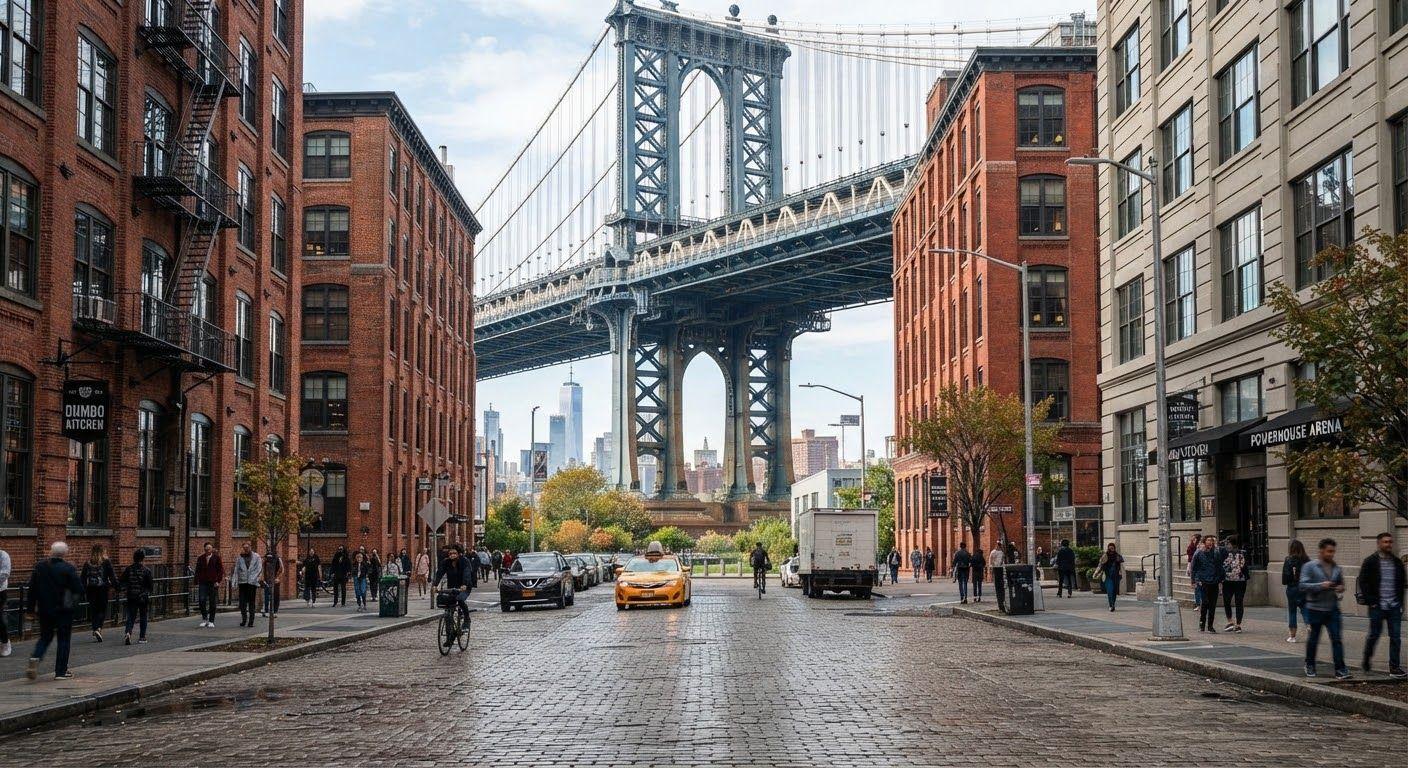
DUMBO
Nineteenth-century waterfront factories reimagined as a dramatic design, theatre, and park district.
DUMBO
Nineteenth-century waterfront factories reimagined as a dramatic design, theatre, and park district.
Coined in 1978 by pioneer loft artists hoping an unglamorous acronym ("Down Under the Manhattan Bridge Overpass") would keep landlords away, DUMBO occupies one of the most dramatic urban footprints on earth. Between the granite towers of the Brooklyn and Manhattan Bridges, nineteenth-century cardboard box factories and Civil War-era coffee warehouses with embedded rail tracks now house avant-garde theaters, independent art-book publishers, and the eighty-five-acre waterfront ribbon of Brooklyn Bridge Park.
Must-Visit Enclaves & Spots
+3 more in full guide →Washington & Water Street Vista
The iconic cobblestone canyon where red-brick warehouse facades frame the Manhattan Bridge tower with the Empire State Building inside its arch.
St. Ann’s Warehouse
World-class international theater staged inside a restored 1860 brick tobacco warehouse alongside an open-air walled triangle garden.
Empire Stores 5th-Floor Terrace
Ride the public elevator inside an 1869 coffee warehouse straight up to a free rooftop viewpoint looking directly into both bridges and Lower Manhattan.
Local Pro Tip: Walk across the Brooklyn Bridge from Manhattan to DUMBO before 8:00 AM for an empty promenade, grab coffee and pastries at Butler (40 Water St), and take the $4 NYC Ferry from Fulton Ferry Landing back across the river.
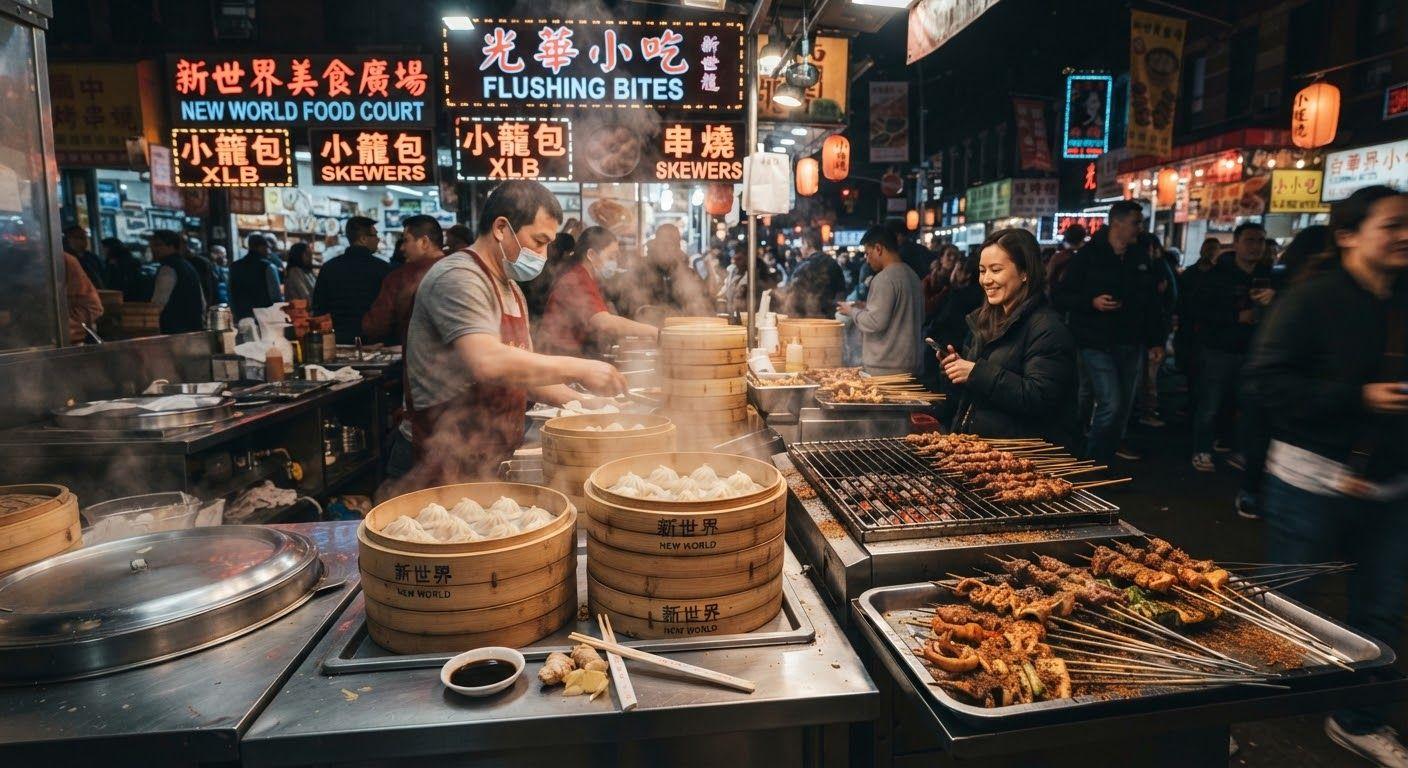
Flushing
The electric terminus of the 7 train and New York’s undisputed capital of regional Asian cuisine.
Flushing
The electric terminus of the 7 train and New York’s undisputed capital of regional Asian cuisine.
Step out of the Main Street–Flushing 7 train station and you enter one of the most dynamic commercial and culinary hubs in the Western Hemisphere. Originally chartered by Dutch settlers in 1645—where the Bowne House and Quaker Meeting House helped establish religious freedom in America—modern Flushing is a sensory feast of Shanghai soup-dumpling parlors, Sichuan dry-pot halls, Taiwanese bakeries, Korean barbecue along Union Street, and peaceful botanical gardens.
Must-Visit Enclaves & Spots
+3 more in full guide →White Bear
Order item No. 6 at this cash-only counter: twelve delicate pork wontons bathed in house-roasted chili oil and crunchy pickled mustard greens.
New World Mall Food Court
Nearly thirty pan-Asian stalls under one basement roof serving hand-pulled Lanzhou noodles, sizzling mala dry pot, and Taiwanese shaved snow.
Nan Xiang Xiao Long Bao & Shanghai You Garden
Steaming bamboo baskets of crab-and-pork soup dumplings pleated to order, paired with crispy pan-fried scallion pancakes.
Local Pro Tip: Want to get from Midtown Manhattan to Flushing in 19 minutes flat? Take the Long Island Rail Road (LIRR) Port Washington Branch from Penn Station or Grand Central Madison using a $5 off-peak CityTicket.
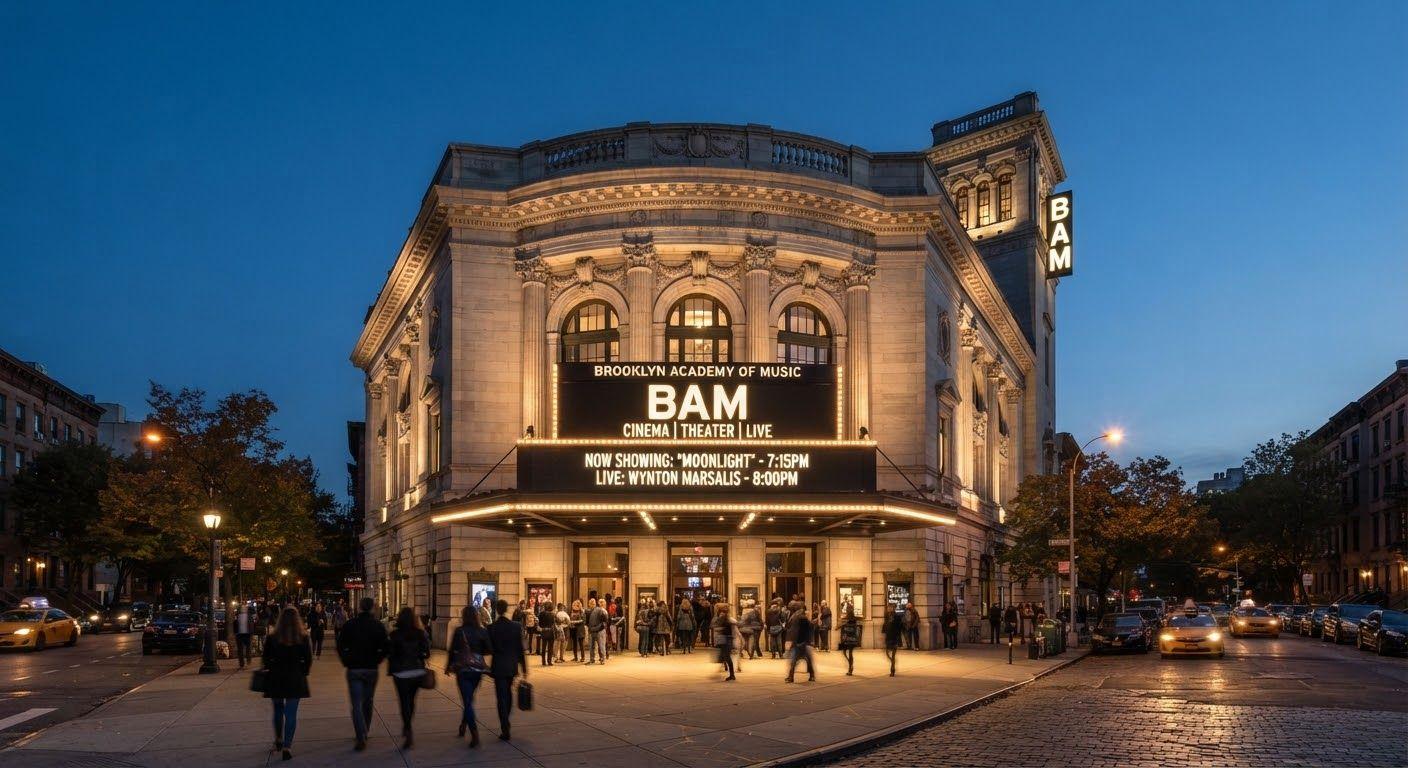
Fort Greene
Brooklyn’s cultural brownstone heart anchored by BAM and a historic hilltop park.
Fort Greene
Brooklyn’s cultural brownstone heart anchored by BAM and a historic hilltop park.
Radiating outward from the thirty-acre hillside of Fort Greene Park—Brooklyn’s very first public park, designed by Frederick Law Olmsted and Calvert Vaux in 1867—Fort Greene is a masterclass in neighborhood grace. Its tree-shaded blocks of Italianate and Eastlake brownstones have nurtured generations of writers, filmmakers, and musicians (from Walt Whitman and Richard Wright to Spike Lee), while the surrounding BAM Cultural District stages some of the most adventurous theatre, dance, and cinema on the planet.
Must-Visit Enclaves & Spots
+3 more in full guide →Brooklyn Academy of Music (BAM)
America’s oldest performing arts center (1861), home to the Howard Gilman Opera House, the distressed-brick Harvey Theater, and BAM Rose Cinemas.
Fort Greene Park & Prison Ship Martyrs Monument
Climb the grand 100-foot-wide granite staircase designed by McKim, Mead & White to the 149-foot Doric column overlooking Brooklyn.
Greenlight Bookstore
Community-funded independent bookstore on Fulton Street with author readings, Brooklyn literary journals, and curated staff tables.
Local Pro Tip: Visit on a Saturday morning for the Fort Greene Park Greenmarket and tennis-court people-watching, then walk South Oxford Street and South Portland Avenue—two of the most pristine brownstone blocks in Brooklyn.
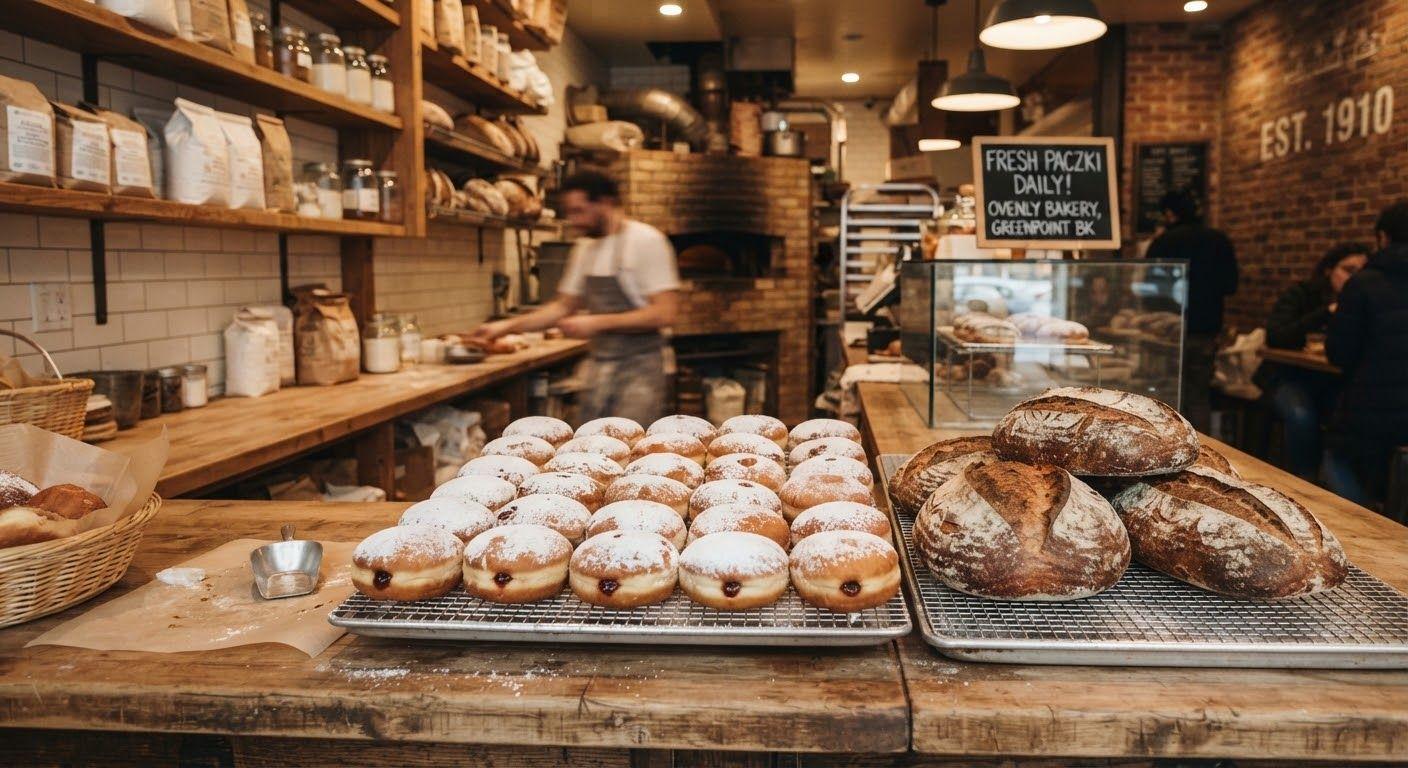
Greenpoint
Brooklyn’s northern peninsula where Little Poland heritage meets waterfront creativity.
Greenpoint
Brooklyn’s northern peninsula where Little Poland heritage meets waterfront creativity.
Tucked at the northernmost tip of Brooklyn between the East River and Newtown Creek, Greenpoint retains an intimate, low-rise maritime character. Along Manhattan Avenue, multi-generational Polish smokehouses and bakeries dust warm rosehip pączki with powdered sugar every morning, while a block west on Franklin and West Streets, nineteenth-century rope factories and garages house boundary-pushing pastry kitchens, independent record shops, and waterfront taverns.
Must-Visit Enclaves & Spots
+3 more in full guide →Syrena Bakery
Traditional Polish breadmaking at its finest: warm plum and rosehip pączki, poppy-seed makowiec rolls, cheese babkas, and caraway rye.
Radio Bakery
From the culinary team behind Rolo’s, serving crackling laminated croissants, brown-butter corn cakes, and loaded focaccia slabs.
WNYC Transmitter Park
A former 1930s public radio transmission pier transformed into a breezy waterfront meadow with direct views of the Midtown skyline.
Local Pro Tip: Instead of transferring subways, hop the $4 NYC Ferry East River Route to the India Street / Greenpoint Landing pier for a 12-minute open-air commute from East 34th Street in Midtown.
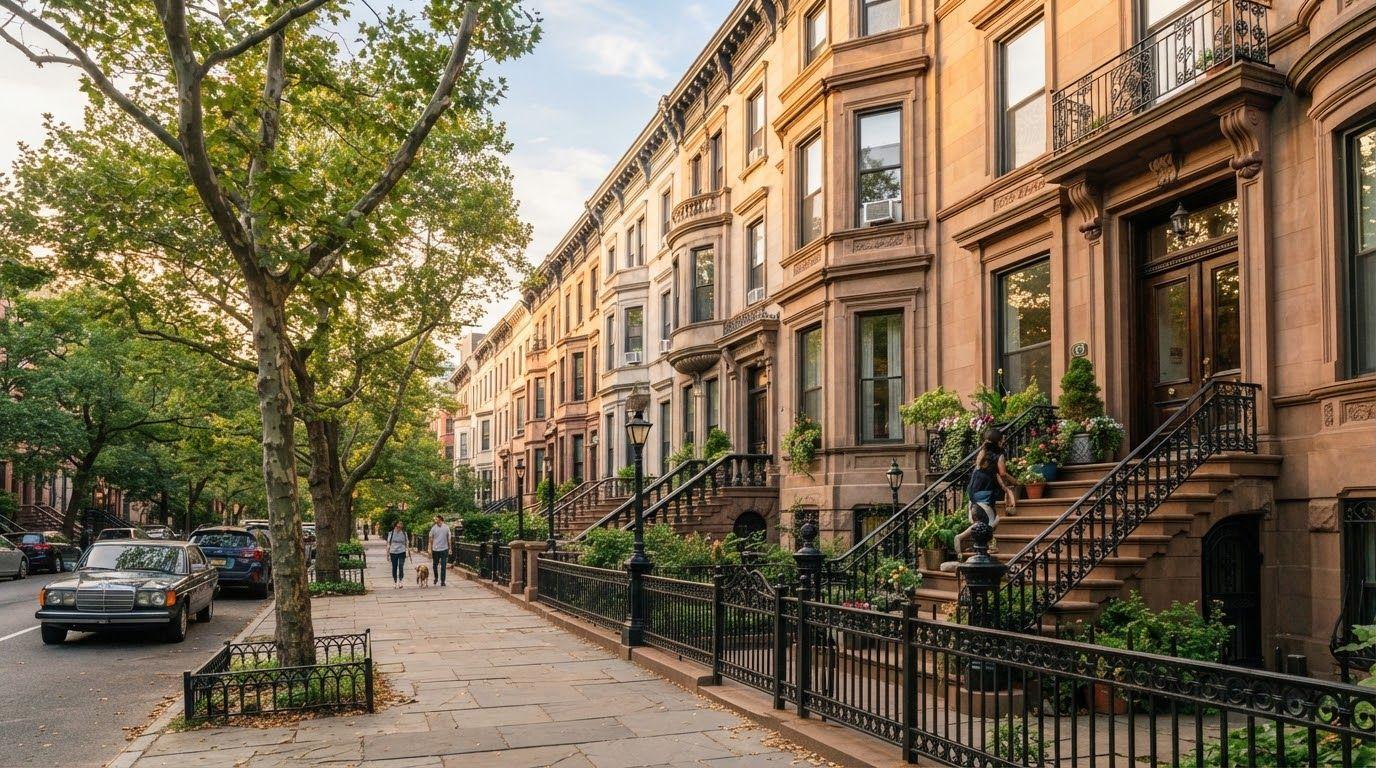
Harlem
The enduring architectural and musical capital of Black America.
Harlem
The enduring architectural and musical capital of Black America.
Stretching from 110th Street north toward the Harlem River, Harlem is one of the world’s essential cultural neighborhoods. Along 125th Street, the neon marquee of the Apollo Theater and the research vaults of the Schomburg Center anchor a century of artistic revolution, while the surrounding historic districts—from Mount Morris Park to Strivers’ Row—preserve some of the finest late-nineteenth-century brownstone architecture, parlor jazz clubs, and Southern & West African dining rooms in the United States.
Must-Visit Enclaves & Spots
+3 more in full guide →The Apollo Theater
Since 1934, the proving ground where Ella Fitzgerald, James Brown, Lauryn Hill, and Stevie Wonder made history. Catch Amateur Night on Wednesdays.
Bill’s Place & Room 623
Hear acoustic bebop inside a 133rd Street Swing Street brownstone parlor where Billie Holiday sang, or behind the velvet curtain at Room 623.
Amy Ruth’s & Melba’s
Golden, crisp fried chicken and waffles named after Harlem icons at Amy Ruth’s, or southern comfort classics at Melba Wilson’s neighborhood table.
Local Pro Tip: Visit Marcus Garvey Park on a sunny Saturday afternoon between May and October to hear the live Harlem Drum Circle echo against the park’s schist cliffs.
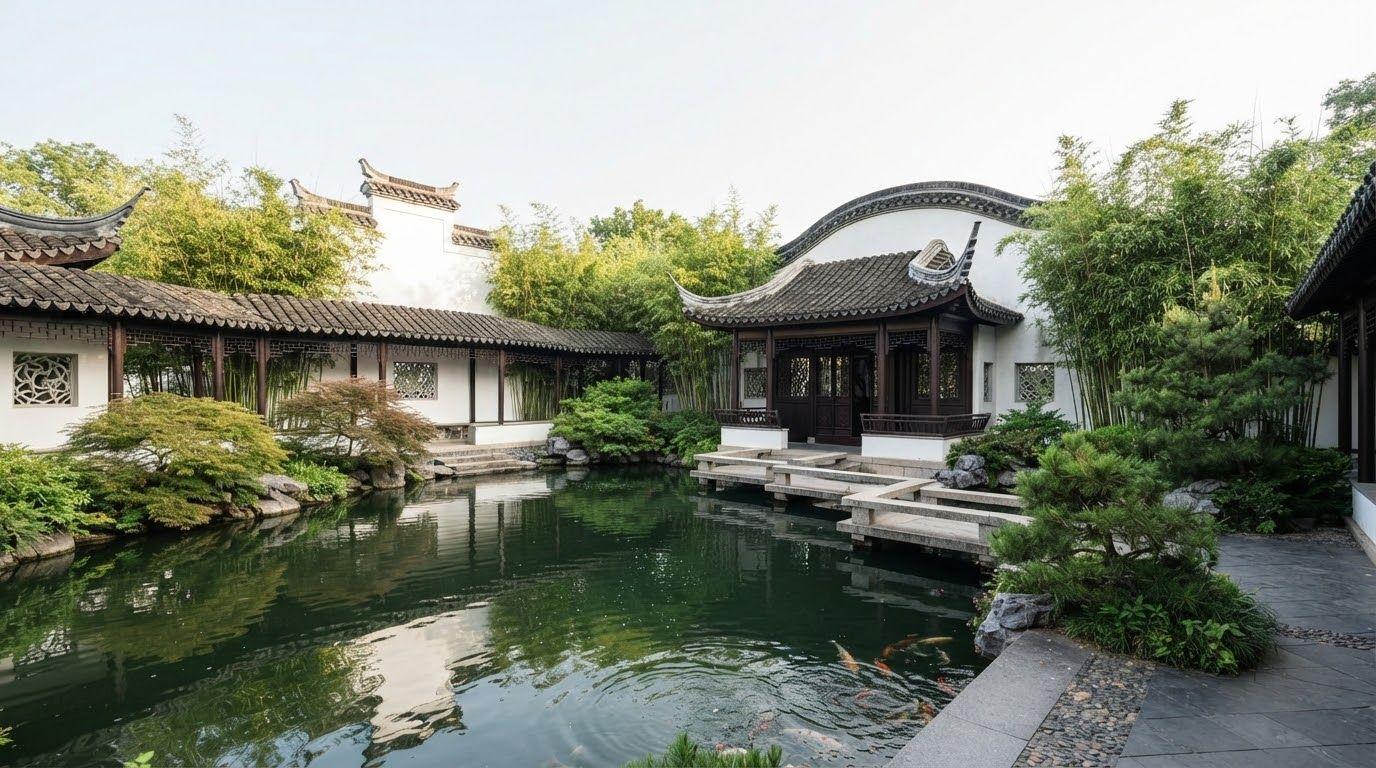
St. George / Snug Harbor (Tompkinsville)
Staten Island’s cultural North Shore where a free harbor cruise meets botanical sanctuaries and Colombo-style feasts.
St. George / Snug Harbor (Tompkinsville)
Staten Island’s cultural North Shore where a free harbor cruise meets botanical sanctuaries and Colombo-style feasts.
Anchored by the St. George Ferry Terminal overlooking Upper New York Bay and Lower Manhattan, Staten Island’s North Shore packs three distinct worlds within a ten-minute bus or train hop. Directly up the hill sit the ornate 1929 St. George Theatre and Victorian hillside homes; ten minutes west along the Kill Van Kull lies the 83-acre Snug Harbor Cultural Center and its breathtaking Chinese Scholar’s Garden; and one stop south in Tompkinsville thrives "Little Sri Lanka," one of North America’s premier South Asian dining corridors.
Must-Visit Enclaves & Spots
+3 more in full guide →New York Chinese Scholar’s Garden
Assembled inside Snug Harbor by 40 master artisans from Suzhou without nails or glue, featuring koi ponds, bamboo paths, and Lake Taihu rockery.
Lakruwana & New Asha
Feast on banana-leaf baked Lamprais, bowl-shaped coconut egg hoppers, deviled chicken, and weekend clay-pot curry buffets.
Historic St. George Theatre
A meticulously restored 1,900-seat Spanish and Italian Baroque theater hosting concerts, comedy, and classic film nights steps from the ferry.
Local Pro Tip: Your MTA OMNY tap or MetroCard includes a free transfer between Manhattan subways (1/R/W/4/5 at South Ferry/Bowling Green) and the Staten Island Railway (SIR) at St. George.
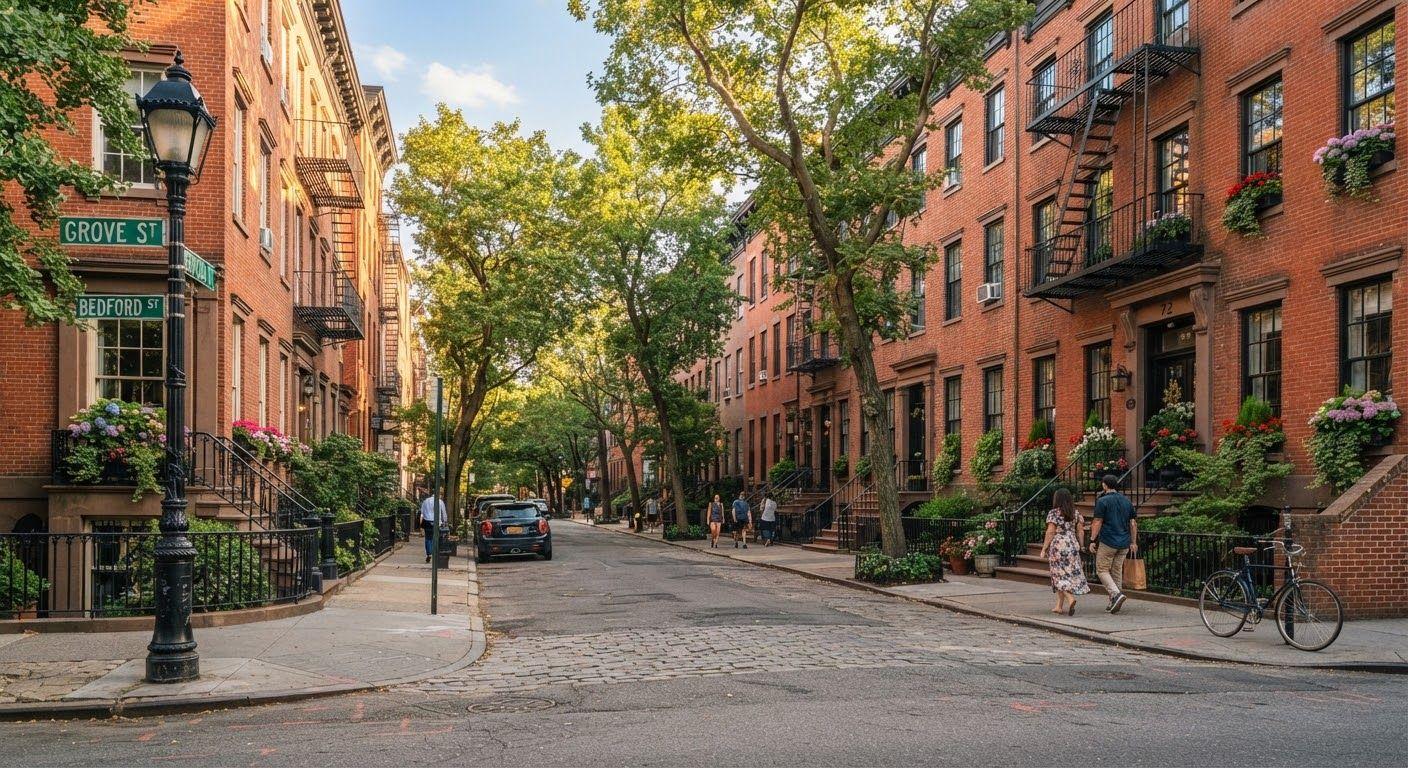
West Village
Where Manhattan’s relentless street grid surrenders to 19th-century lanes and wisteria-draped mews.
West Village
Where Manhattan’s relentless street grid surrenders to 19th-century lanes and wisteria-draped mews.
The West Village is New York at its most romantically cinematic. Because nineteenth-century villagers fiercely resisted the rectangular Commissioner’s Plan of 1811, streets here follow colonial shoreline paths where West 4th Street famously crosses West 10th, 11th, and 12th Streets. Beneath a canopy of London plane trees and ginkgoes, Federal-brick townhouses, converted horse stables, and subterranean jazz clubs frame one of the greatest walking and dining neighborhoods in the world.
Must-Visit Enclaves & Spots
+3 more in full guide →John’s of Bleecker Street
Anthracite coal-fired pizza perfection since 1929. Whole pies only—never slices—served in initial-carved wooden booths.
Grove Court & 75½ Bedford St
Peer through the iron gate at an 1853 enclave of six Federal townhouses, then walk around the corner to see NYC’s narrowest house (9.5 feet wide).
Three Lives & Company
The Platonic ideal of the neighborhood literary bookshop, complete with crimson storefront woodwork and handwritten staff picks.
Local Pro Tip: Skip the weekend brunch crowds on Bleecker Street and wander Commerce, Barrow, and Perry Streets before 10:00 AM on a weekday, then end at Pier 45 in Hudson River Park for sunset.