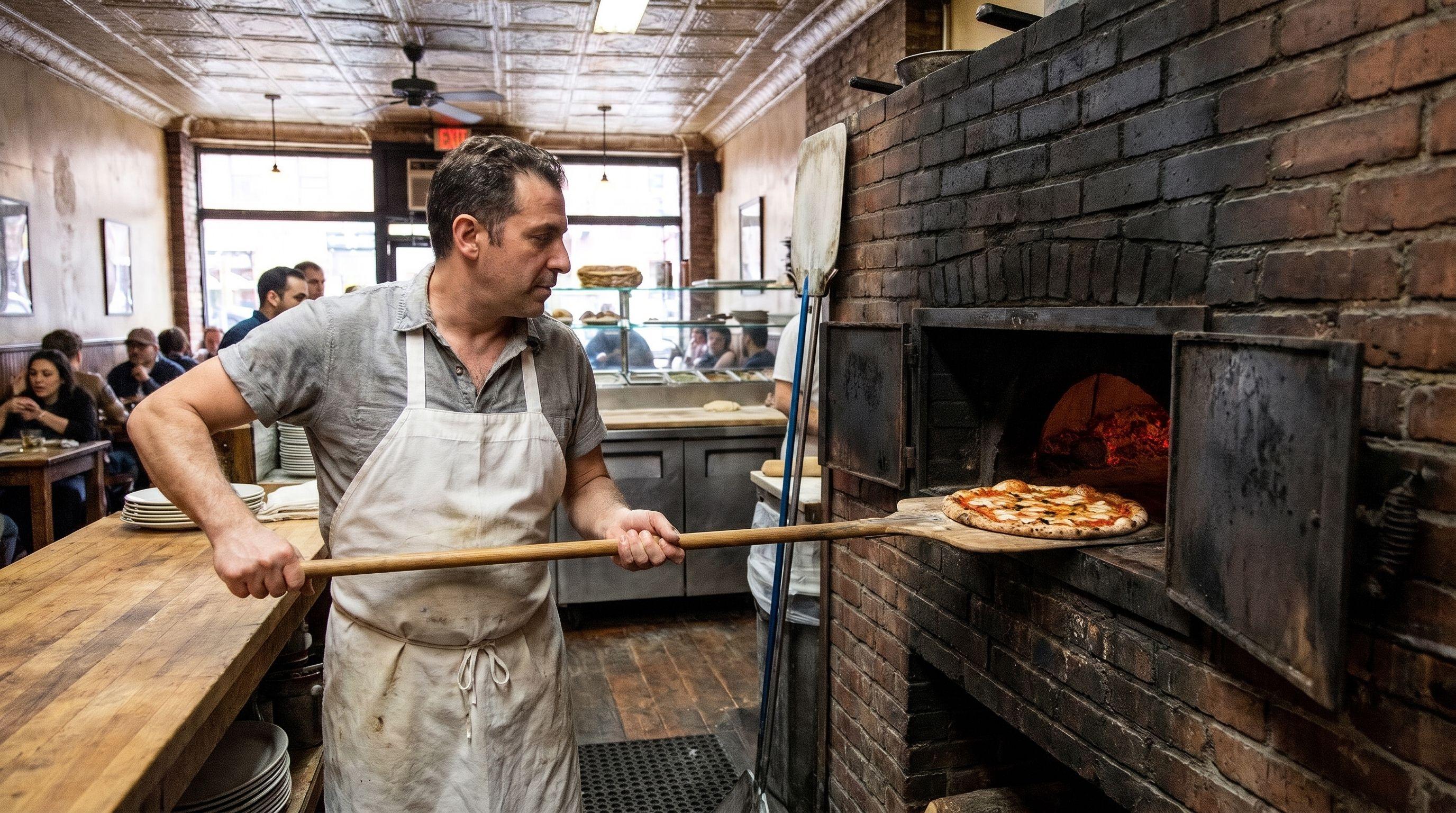
Turn onto Bleecker Street just past Seventh Avenue on any brisk autumn afternoon, and before you see the weathered gold-leaf lettering on the transom or the line wrapping past the corner of Jones Street, your senses catch it: the razor-dry, mineral perfume of burning Pennsylvania anthracite coal. Unlike the wood-fired ovens of Naples that perfume the air with sweet embers of hickory or ash, an authentic New York coal oven burns with an intimidating, nearly smokeless white intensity. It produces an ambient volcanic heat that reaches 900 degrees Fahrenheit without the billows of soot that would choke a dense Manhattan tenement block.
Inside this narrow brick tunnel, the culinary soul of New York was forged. When Gennaro Lombardi fired up Manhattan’s first commercial pizza oven on Spring Street in 1905, he didn’t select coal for its flavor profile. He chose anthracite because it was the industrial fuel that powered the Gilded Age—shipped via railcar through the anthracite veins of eastern Pennsylvania to heat Manhattan apartment basements and steam factories. But that historic accident created a thermodynamic miracle: an oven floor so dry, radiative, and fiercely hot that raw dough develops a crackling, leopard-spotted shell in ninety seconds while remaining pillowy, aerated, and supple within.
The Living Lineage of Five-Borough Coal Craft
- 1John’s of Bleecker Street (West Village): Zero slices served since 1929. Pure whole pies, heavily charred undercarriages, aged mozzarella layered beneath hand-crushed tomatoes.
- 2Patsy’s of East Harlem (1st Ave): The revolutionary birthplace of the coal-fired slice counter in 1933. Ultra-thin crust with sweet plum tomato reduction and delicate char.
- 3Totonno’s of Coney Island (Neptune Ave): The coastal holy grail founded by Lombardi protégé Antonio Pero in 1924. Famous for dough proofed in open wooden dough trays and pure pecorino dusting.
The Physics of 900 Degrees: Why Wood and Gas Can’t Compare
To understand the cult status of true New York coal pizza, one must grasp basic heat transfer. In conventional gas deck ovens, like those installed in ninety-five percent of corner slice joints, the floor runs at roughly 520 to 560 degrees Fahrenheit. The baking cycle requires twelve to fourteen minutes. Over that quarter-hour, moisture evaporates steadily from the dough, producing the leathery, bread-like structure of the standard street slice.
Hardwood ovens—the darlings of modern artisan pizzerias—burn hotter, often peaking near 750 degrees. But wood generates abundant water vapor as cellulose burns, creating a humid microclimate inside the dome that yields the tender, floppy, fork-and-knife crust characteristic of classic Neapolitan styles. Anthracite, by contrast, is nearly pure carbon (up to 97%). It yields virtually no moisture, minimal smoke, and tremendous radiant thermal mass.
“If the Department of Buildings tried to approve an anthracite coal oven in Manhattan today, they’d laugh you out of 280 Broadway. What we have left isn’t just restaurants; they are living industrial monuments.”
— Robert Santorelli, Third-Generation Village Preservation Historian
The Grandfathered Registry: The Only Remaining Coal Ovens in the Five Boroughs
Under modern New York City environmental codes and strict clean air regulations enacted over the past half-century, building a new commercial solid-fuel coal burning oven within the five boroughs is virtually impossible. The handful of active coal pits functioning today operate strictly under grandfathered commercial permits issued long before World War II.
If an owner permits the fire to go cold for more than six continuous months or modifies the original structural flue masonry without variance approvals, that grandfathered operating status can be permanently extinguished. To visit these dining rooms is to step onto an operational nineteenth-century factory floor disguised as a neighborhood red-sauce temple.
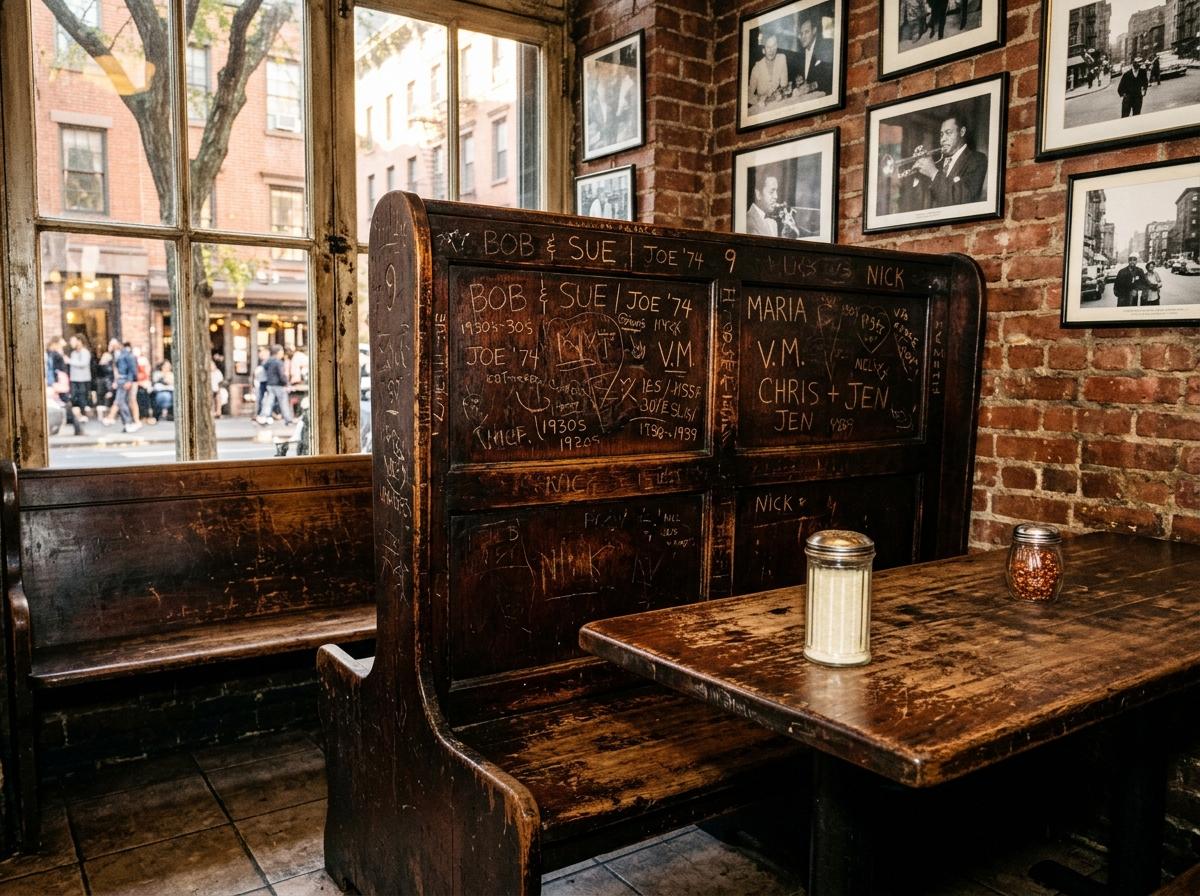
John’s of Bleecker Street
278 Bleecker Street, New York, NY 10014
The "Boom Pie" — aged shredded mozzarella base, handmade spicy fennel sausage, crushed garlic cloves, and pickled hot cherry peppers that caramelize against the 900-degree stone floor.
No slices ever. Do not ask. Order two whole pies for three diners; the crust is feather-light and vanishes quickly. Line forms by 5:15 PM on weekends. Cash preferred.
Patsy’s Pizzeria
2287 1st Avenue (at 117th St), New York, NY 10035
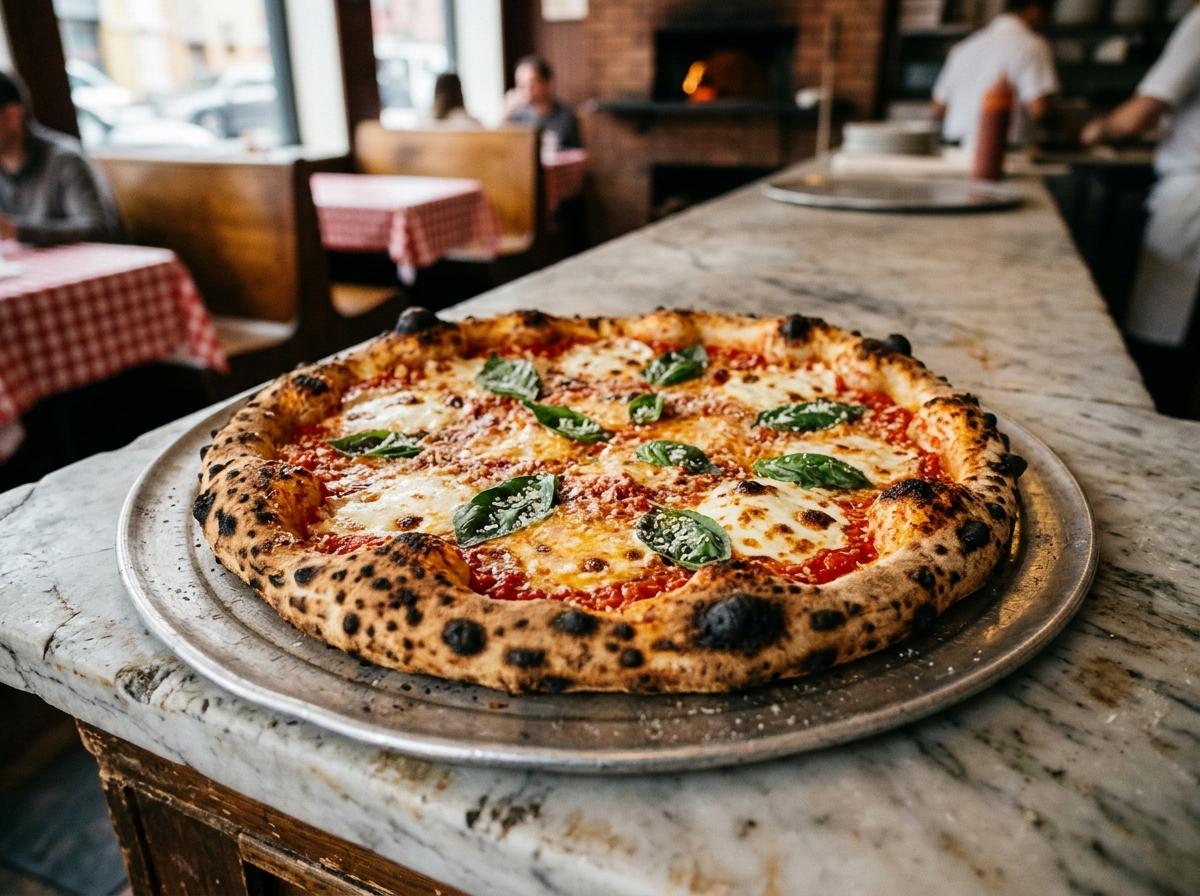
Plain Coal-Fired Margherita with sweet crushed San Marzano reduction, delicate ribbons of aged mozzarella, and sharp Pecorino Romano dust.
Patronized for decades by Frank Sinatra and Joe DiMaggio. Still operates the historic takeaway window where you can purchase genuine coal-fired slices on paper plates.
Totonno’s Pizzeria Napolitano
1524 Neptune Avenue, Coney Island, Brooklyn, NY 11224
Coal-Fired White Pie with hand-pulled mozzarella curd, slivered fresh garlic sautéed in olive oil, fragrant oregano, and a generous blizzard of aged Locatelli Pecorino.
When the handmade daily dough batch runs out, the kitchen shuts immediately. Arrive early on Saturday afternoon; take the D express train directly to the end of Brooklyn.