The West Village refuses to play by the rules of the Commissioner’s Plan of 1811. When city surveyors marched a relentless rectangular grid of numbered streets up Manhattan Island, the residents of Greenwich Village fiercely defended their existing web of diagonal cow paths, colonial lanes, and shoreline roads. The result is a neighborhood where West 4th Street famously intersects West 10th, 11th, and 12th Streets, disorienting newcomers and delighting walkers.
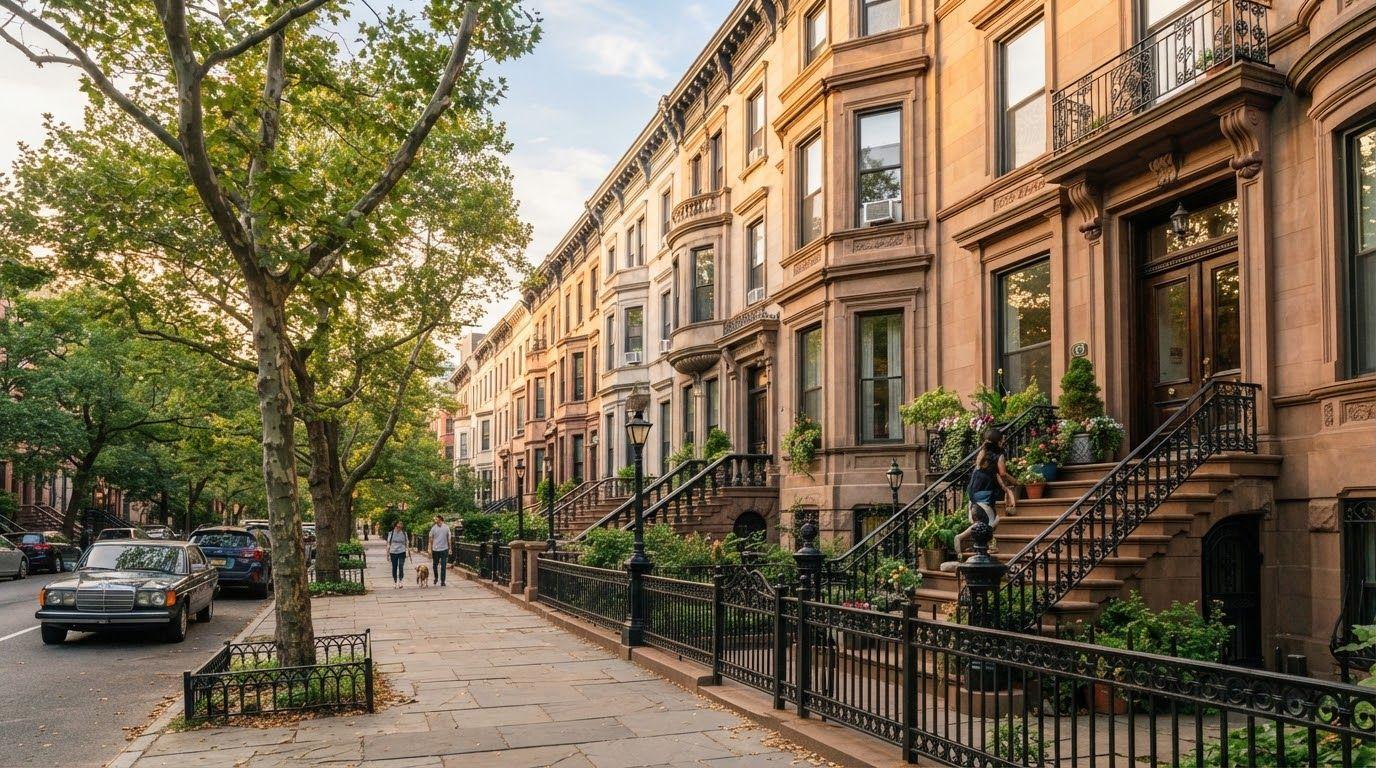
Because its blocks are shorter and angled toward the Hudson River, light filters differently through the West Village’s canopy of London plane trees and ginkgoes. Every corner reveals Federal-style brick rowhouses with hand-forged iron boot scrapers, hidden keyhole gardens, and converted nineteenth-century carriage houses.
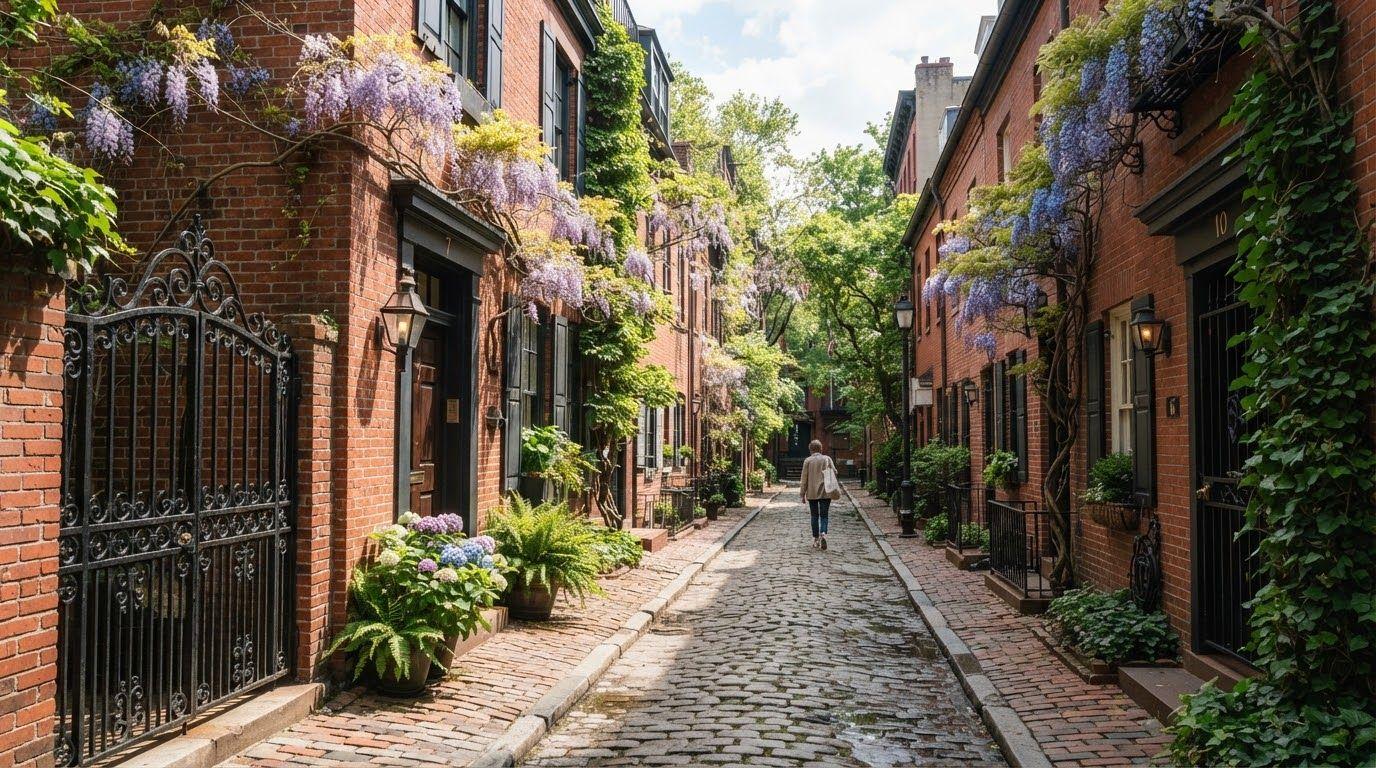
Begin your walk just north of Washington Square Arch at Washington Mews—a private, gated cobblestone lane stretching between Fifth Avenue and University Place that originally served as the two-story horse stables for the grand Greek Revival townhouses on Washington Square North.
From there, meander west across Sixth Avenue into the heart of the historic district toward Grove Street and Bedford Street. At 10 Grove Street, peer through the wrought-iron gate into Grove Court: an enchanting cul-de-sac of six federal-brick townhouses built in 1853 around a shaded garden courtyard, immortalized in O. Henry’s classic story "The Last Leaf."
Right around the corner at 75½ Bedford Street stands the narrowest house in New York City. Measuring just nine feet and six inches wide, this three-story brick sliver was built in an old carriage entranceway in 1873 and once housed Pulitzer Prize-winning poet Edna St. Vincent Millay and anthropologist Margaret Mead.
No West Village afternoon is complete without stepping inside Three Lives & Company at the corner of West 10th and Waverly Place. With its crimson facade, creaking wooden floorboards, and handwritten staff recommendation cards, it remains the Platonic ideal of the neighborhood independent bookstore. Afterward, claim a sidewalk table at Caffe Dante on MacDougal Street—founded in 1915—for a seasonal Negroni or shakerato espresso.